
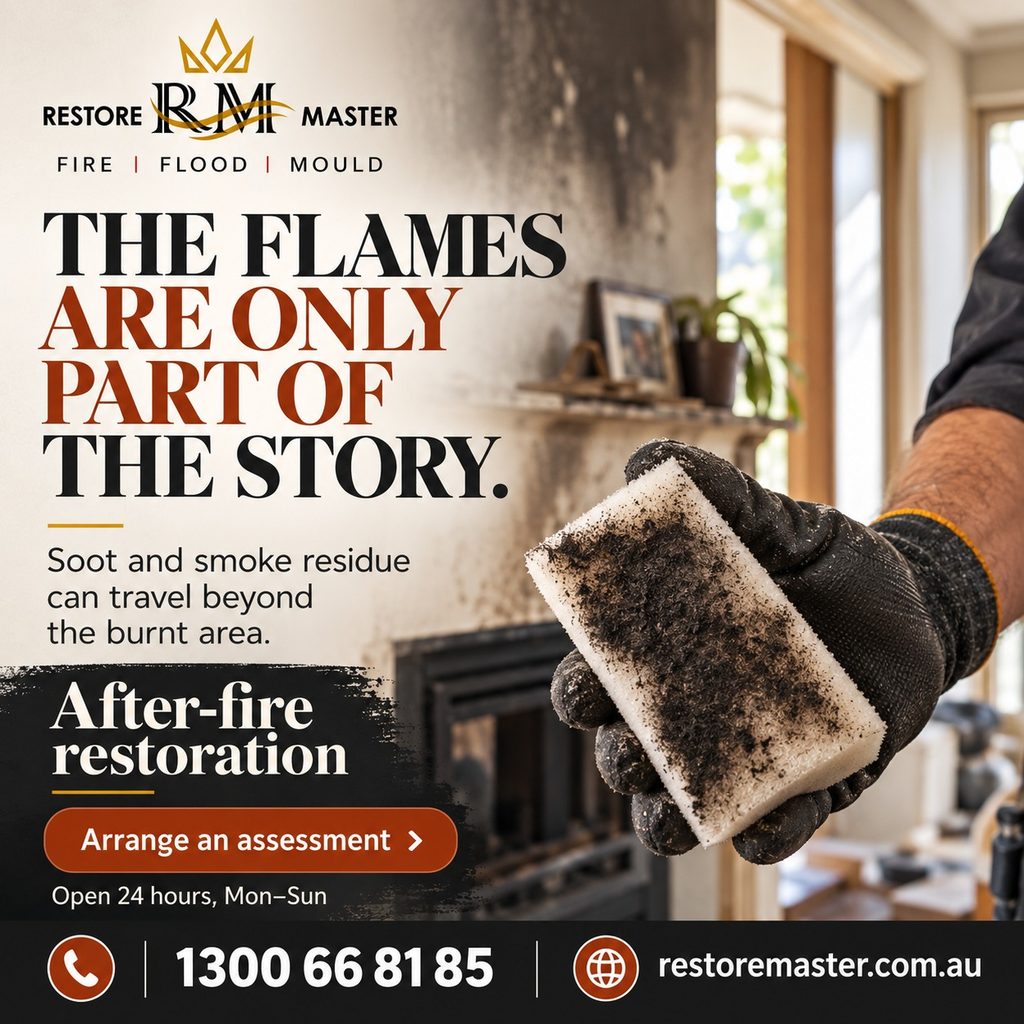
When a fire occurs, the visible flames and burnt materials are only part of the damage. Smoke, soot and heat can affect areas throughout a property, including rooms that were not directly exposed to the fire.
Even after the fire has been extinguished, smoke residue can remain on walls, ceilings, carpets, furniture and other belongings. Water used during firefighting can also leave floors, walls and building materials wet.
Understanding the full extent of the damage is an important first step towards restoring your property.
How Does Smoke and Soot Affect a Property?
Smoke can travel through doorways, hallways, ventilation systems and other openings. As it spreads, it can leave residue on different surfaces and materials.
Common signs of smoke and soot damage include:
- Black or grey residue on walls and ceilings
- Smoke staining around doors and windows
- Persistent burnt or smoky odours
- Soot deposits on furniture and upholstery
- Discolouration of carpets and other soft furnishings
- Residue on fixtures, fittings and household contents
The affected areas may extend well beyond the room where the fire started.
Why Professional Fire Damage Restoration Matters
Cleaning after a fire is not always as straightforward as wiping down visible surfaces. Different materials can react differently to smoke, soot and cleaning methods.
Using unsuitable products or techniques may spread residue or cause further damage.
A professional fire damage restoration assessment can help determine:
- Which surfaces and materials have been affected
- Whether smoke and soot have spread into other rooms
- Which belongings may be suitable for restoration
- Whether firefighting water has caused additional damage
- What cleaning, drying and odour treatment may be required
What Happens During Fire Damage Restoration?
Every fire incident is different. Depending on the condition of the property, the restoration process may include several stages.
1. Initial Assessment
The affected property is assessed to identify visible fire damage, smoke contamination, soot residue and potential safety concerns.
2. Smoke and Soot Cleaning
Appropriate cleaning methods are selected according to the surfaces and materials affected. This may include walls, ceilings, flooring, furniture and other salvageable contents.
3. Smoke Odour Treatment
Smoke odours can remain after visible residue has been removed. Suitable odour treatment may be required depending on the source and extent of contamination.
4. Water Damage Assessment
Firefighting activities can introduce significant amounts of water into a property. Wet materials may require water extraction, moisture assessment and structural drying.
5. Restoration Planning
Once the affected areas have been assessed and treated, further repair or reinstatement work can be considered where necessary.
What Should You Do After a Fire?
Your safety should always come first.
- Do not enter the property until emergency services or the appropriate authorities have confirmed it is safe.
- Avoid touching soot-covered surfaces unnecessarily.
- Keep away from damaged electrical systems and unstable structures.
- Contact your insurer before arranging major cleaning or repairs.
- Photograph visible damage when it is safe and permitted to do so.
- Seek professional advice about cleaning and restoration.
Avoid attempting extensive DIY soot removal, especially where contamination is widespread or the materials may be hazardous.
Restore Master – Fire Damage Restoration
Fire can leave behind complex damage involving heat, smoke, soot and water. Proper assessment helps identify the affected areas and determine suitable restoration methods.
Restore Master provides fire damage restoration services for residential and commercial properties, including assessment of smoke and soot damage, cleaning of affected surfaces and restoration support.
If your property has experienced a fire, smoke contamination or related water damage, visit Restore Master to learn more about the available restoration services.
Restore Master | Fire • Flood • Mould
Website: https://www.restoremaster.com.au/
Phone: 1300 66 81 85